
After having the eyes of the world turned toward the region during the UCI Road World Championships, can the Greater Montreal area further strengthen its reputation as a cycling tourism destination?
Following the arrival of the world’s best cyclists for these high-level competitions, will tourists want to come and ride in the footsteps of their cycling idols?
At Tourisme Montérégie, officials say they have taken steps to respond to the demand from cycling enthusiasts who may want to visit the region after seeing the spectacular images from the races.
“We expect lasting benefits from all this exposure,” says Dominic Provost, Director of Marketing and Communications.
“It’s a little early to measure the impact, but we expect to see results, probably more so next spring,” he says.
“We estimate that the exposure received is equivalent to a $1.9 million investment. Our region was seen around the world. We also believe that cyclists from the Greater Montreal area will be tempted to come and ride here.”
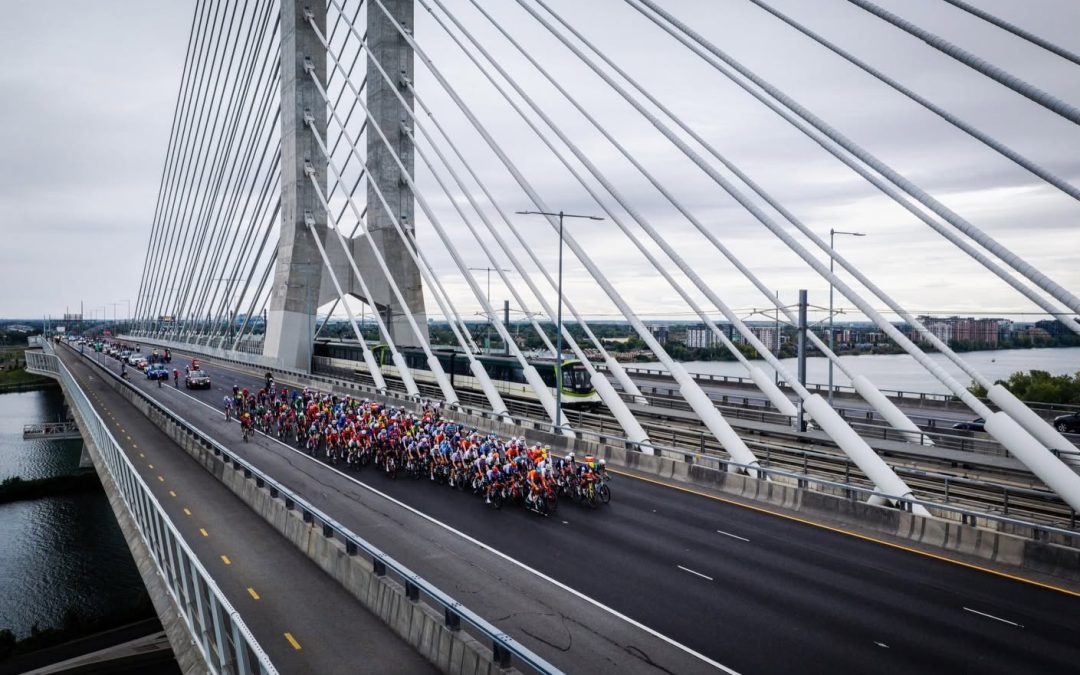
The World Championship cyclists followed a variety of routes that took them outside the city. They could notably be seen riding across the Samuel De Champlain Bridge.
High-speed racing also took place on the cycling path along the St. Lawrence Seaway, on the Circuit Gilles-Villeneuve and in several Montérégie municipalities, including along Route 112.
Journalists also travelled to Montreal to cover the excitement surrounding the competitions in a setting that was ideal for cycling, adds Mr. Provost.
Municipalities across the region have also renewed their interest in cycling and the economic benefits it can generate.
The Montérégie at the Heart of the World Championships
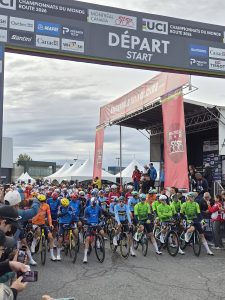
The World Championships were not limited to Montreal. The Montérégie played a key role in both Elite road races, with the starts taking place in Brossard and the courses passing through several municipalities, including Chambly.
Visitors may now be tempted to explore cycling routes such as the Véloroute gourmande, which crosses the Montérégie on its way toward the Eastern Townships.
The UCI had also highlighted the Montérégie portion of the courses as an opportunity to experience the region’s landscapes, heritage and orchards.
Now that the races are over, the question can be asked: will cyclists want to come back and ride where the champions raced?
The “Champions’ Loop”
The Montérégie has wasted no time. The region has already begun turning this international exposure into a cycling tourism offering, notably with the “Champions’ Loop,” inspired by a portion of the men’s race route.
The 48-kilometre cycling route takes riders through the heart of the Montérégie. With heritage sites, rivers, orchards, cafés, microbreweries and views of Mount Saint-Hilaire, the route offers cyclists the opportunity to discover, at their own pace, some of the landscapes that provided the backdrop for this major international sporting event.
The suggested starting point is La Croisée des chemins in the Chambly area. It is also possible to start from Saint-Jean-sur-Richelieu by following the Chambly Canal to Chambly before beginning the loop.
From Chambly, the route heads toward Mont-Saint-Hilaire, through a landscape where the mountain, orchards and agricultural scenery take centre stage.
Chemin de la Montagne offers a particularly memorable experience, with its rows of apple trees, views over the surrounding region and distinctly Montérégie atmosphere.
It is an ideal loop for combining a sporting bike ride with a gourmet getaway and a discovery of the region’s cultural and natural attractions.
This route is not the complete official course of the Elite Men’s race at the 2026 UCI Road World Championships in Montreal. Rather, it is a cycling tourism route inspired by a portion of the event’s passage through the Montérégie, designed to allow cyclists to experience part of the event at their own pace, says Dominic Provost.
The Long-Term Impact Remains to Be Seen
After all these efforts, it will be important to measure, over the coming months and years, the impact of the World Championships on cycling tourism. The event was one of Quebec’s most significant sporting events since the 1976 Olympic Games.
The real question will be whether seeing the world’s best cyclists will inspire cycling enthusiasts to discover the roads, villages, orchards and cycling routes of the Montérégie for themselves — a region well served by Voyager à vélo’s services.
The champions have gone home with their rainbow jerseys.
Now it’s up to cycling tourists to come and discover the roads where they competed.
Read also: